

Navigating Amsterdam's Healthcare System: A Complete Guide for Expats
Publsihed • Tue, Dec 16, 2025
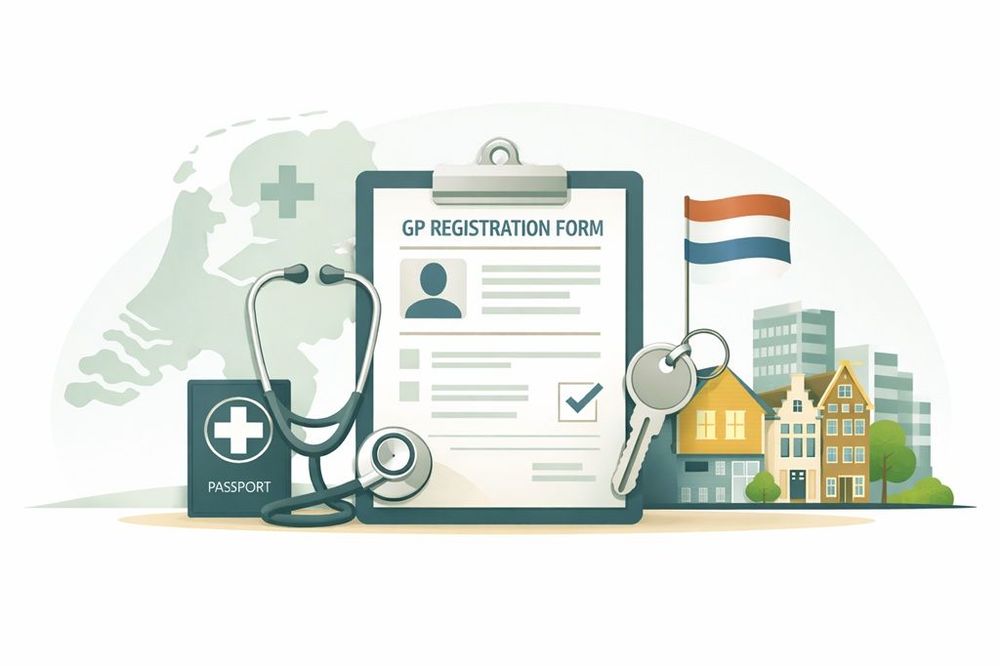
Navigating Amsterdam's Healthcare System
A practical, no-nonsense guide for expats and international professionals — from finding a GP and sorting health insurance, to what to do at 2am when something goes wrong. It's actually better than you think.
The Dutch Healthcare System: Better Than Its Reputation
When people arrive in Amsterdam and discover they can't just walk into a GP surgery and demand antibiotics, the reaction is predictable: mild panic, followed by a trip to a Dutch pharmacy for paracetamol (which, incidentally, is the answer to approximately 80% of Dutch medical complaints regardless of severity).
But here's the thing — once you're properly set up, Amsterdam's healthcare system is genuinely excellent. It ranks consistently among the top healthcare systems in Europe, and having lived here and used it for many years, including the birth of two children, the experience has been modern, professional, well-equipped, and caring when it mattered most.
Compared to the UK, I'd say the Dutch system is faster, more modern, and better equipped. Yes, your GP will suggest paracetamol for most things — but when something is actually serious, the response is swift, the facilities are excellent, and the staff are genuinely caring. We had two children born here in Amsterdam and at no point did we feel anything other than completely safe and well looked after. Give it a chance before you write it off.
The key is understanding how it works — and setting yourself up correctly from the start. This guide walks through everything: finding and registering with a GP, sorting health insurance, what to do in an emergency, pharmacies, and seeing a specialist. We've also included a section on what to do if you can't find a GP, because — and we won't sugarcoat this — it has become harder in recent years.
Everything in the Dutch healthcare system flows from having a registered address. Get that sorted first, and the rest follows. At City Retreat, all tenants can register their address with the Gemeente from day one of their tenancy — which unlocks your BSN, which unlocks health insurance, which means you can register with a GP. It sounds like a lot of steps, but done in order it moves quickly. Our Amsterdam registration guide covers the address and BSN process in full.
Registering with a GP (Huisarts): Do It Before You Need One
Your GP — called a huisarts in Dutch, which translates literally as "house doctor" though they will not come to your house — is the foundation of the Dutch healthcare system. They handle everything from routine check-ups to chronic conditions, minor procedures, and referrals to any specialist you may need. You cannot see a specialist without going through your GP first, which is worth understanding before you arrive.
The most important piece of advice on this page: register with a GP as soon as you arrive, not when you get ill. Registering from your sick bed while trawling through Dutch-language websites is an experience best avoided.
What You Need to Register
To register with a GP in Amsterdam you'll need the following:
- Proof of address — your tenancy agreement or a utility bill showing your Amsterdam address. This is the key document; the GP needs to confirm you live within their catchment area.
- Valid ID — passport, residence permit, or EU identity card.
- Health insurance details — your policy number and insurer name. You'll need to have arranged insurance before registering (more on this below).
- Your BSN — your Dutch citizen service number, needed for health insurance. Not strictly required to make first contact with a GP, but you'll need it to complete registration.
You need a proof of address to register with a GP — not necessarily a BSN. However, you do need a BSN to take out Dutch health insurance, and most GPs will want your insurance details before completing registration. The practical order is: registered address → BSN → health insurance → GP registration. If you're in a hurry, contact the GP first — some will start the process with just your address and ID while insurance is being arranged.
How to Find a GP in Amsterdam
GPs in Amsterdam only accept patients who live within roughly 15 minutes of the practice. This isn't bureaucratic awkwardness — it's so they can reach you in a genuine home emergency. So your first filter is location: find GPs near your apartment, then check which ones are accepting new patients.
The main national GP finder. Search by postcode to see all practices in your area, read patient reviews, and check languages spoken. Primarily Dutch but manageable with Google Translate.
Visit Zorgkaart Nederland →Specifically designed for expats and international patients. English-speaking staff, experience with registration paperwork, and familiar with the challenges of arriving new to the Netherlands.
Visit Central Doctors →A useful resource specifically for internationals navigating the Dutch system. Good overview of GP registration, insurance, and finding English-speaking practices.
Visit H4I →Straightforward: search "huisarts" near your address. Useful for a quick visual of what's nearby, though doesn't show whether practices are accepting new patients — always call to confirm.
Search on Google Maps →The official IAmsterdam directory of doctors in Amsterdam, with notes on English-speaking practices and expat-specialist GPs. A good starting point for newcomers to the city.
Visit IAmsterdam →Primarily a health insurance comparison tool, but also has a national GP database. Useful if you're searching for a GP and comparing insurance at the same time — two birds, one very Dutch stone.
Visit Independer →The GP Shortage: What You Need to Know
We'd be doing you a disservice if we didn't flag this: finding a GP in Amsterdam has become genuinely difficult. Around 60% of GP practices in the city are currently not accepting new patients. Between 45,000 and 194,000 people across the Netherlands are without a registered GP at any given time. This is not a scare story — it's a real situation that affects expats disproportionately, since many practices prioritise long-term local residents.
Don't give up — there are legitimate routes. First, contact your health insurer: they are legally obliged to help you find a GP in your area. Second, contact the Gemeente Amsterdam directly — they can provide a list of practices with availability. Third, if you're stuck and need non-urgent medical advice in the meantime, online GP services like Mobi Doctor connect you with EU-licensed doctors via video call. They're not a replacement for a registered GP, but they're a sensible bridge while you're searching.
What to Expect at Your First Appointment
Many GP practices will invite you for a brief intake appointment when you first register — a chance to go over your medical history and flag any ongoing conditions or medications. Bring any records you have from your home country, and a list of any medication you're currently taking.
One cultural note worth preparing for: Dutch GPs are wonderfully, almost aggressively pragmatic. If your ailment is not serious, you will be advised to rest, take paracetamol, and report back if things get worse. Antibiotics are prescribed cautiously — the Netherlands has one of the most measured approaches to antibiotic prescription in Europe. This can feel abrupt if you're used to a more interventionist style of medicine. It isn't dismissiveness; it's evidence-based practice. And when something genuinely requires attention, the response is fast and thorough.
Dutch Health Insurance: Mandatory, Manageable, and Actually Quite Good
Health insurance in the Netherlands is not optional. If you live or work here, you are legally required to take out basic Dutch health insurance (basisverzekering) within four months of registering your address. Miss that window and the CAK (the Dutch healthcare authority) will fine you — €528 for 2025, with further fines if you remain uninsured. So sort it early.
Understanding the Costs
The basic package is standardised by the Dutch government — every insurer offers the same core coverage, regardless of which provider you choose. What varies between insurers is price, customer service, additional coverage options, and — for expats — how well they handle English-language communication.
| Cost Element | What It Is | 2025 Figure |
|---|---|---|
| Monthly premium (premie) | Your fixed monthly payment to the insurer | ~€159/month (avg) |
| Annual deductible (eigen risico) | The amount you pay out-of-pocket before insurance covers the rest | €385/year |
| GP visits | Completely free — not subject to eigen risico | €0 |
| Voluntary higher deductible | Pay a higher eigen risico (up to €885) in exchange for lower premiums | Up to €500 extra |
| Healthcare allowance (zorgtoeslag) | Government subsidy for lower incomes — worth checking if you qualify | Income-dependent |
The eigen risico — your annual deductible — applies to most treatments except GP visits, maternity care, and care for under-18s. So seeing your GP costs you nothing. It's only when you're referred for specialist treatment or prescription medication that the deductible starts to apply.
Recommended Insurers for Expats
There are around 30 insurers offering basic coverage in the Netherlands. For expats, English-language support and clear policy documentation matter significantly more than they do for Dutch residents. These are worth looking at first:
Built specifically for internationals. Everything in English, no mandatory excess (eigen risico waived), and broad coverage including emergency dental. Intermediary of HollandZorg. Customer service via WhatsApp.
Non-profit insurer with excellent English support and broad provider freedom (restitutiepolis). Higher monthly cost, but you can see any contracted provider without restriction. Popular with corporate expats.
One of the largest Dutch insurers with a solid English-language interface. Good supplementary packages available. A dependable mainstream choice if you want a well-known provider.
Two solid mainstream options worth including in your comparison. Not expat-first, but reliable, well-reviewed, and often among the more competitively priced options for basic coverage.
Use Zorgwijzer (available in English) or Independer to compare premiums, coverage, and ratings side by side. The annual switching window closes on 31 December — after that, you're locked in for the year. If you're arriving mid-year, don't wait for January: enrol immediately.
What About Supplementary Insurance?
Basic insurance doesn't cover everything. Notably absent: adult dental care beyond emergency treatment, physiotherapy beyond a limited number of sessions, and some mental health support. If these matter to you, supplementary insurance (aanvullende verzekering) is worth adding — and the good news is you can buy it from any insurer, regardless of who holds your basic policy. Insurers can, however, decline supplementary coverage based on pre-existing conditions, so apply for it when you first arrive rather than waiting until you need it.
Emergencies and Out-of-Hours Care: The Numbers to Know
Before you actually need them, save these. The Dutch system distinguishes carefully between life-threatening emergencies and urgent-but-not-critical situations — and routing yourself correctly will save you both time and money.
Ambulance, police, fire. English-speaking operators. Use only for genuine emergencies — ambulances carry costs not always fully covered by basic insurance.
Out-of-hours GP service for Amsterdam. Open evenings, nights, and weekends. For urgent issues that can't wait until your GP opens — but are not life-threatening.
Central Doctors' Service. Can provide advice over the phone and direct you to the nearest on-duty doctor if you're unsure whether you need to be seen in person.
The Huisartsenpost: Your Out-of-Hours GP
The huisartsenpost (HAP) is one of the genuinely good things about the Dutch system. If something goes wrong on a Saturday evening and it's urgent but not ambulance-level, you call the SHDA number above. A GP's assistant (doktersassistente) will assess your situation and decide whether you need to be seen, can manage at home, or need to go to the hospital emergency department. Out-of-hours care is available from 17:00 to 08:00 on weekdays, and around the clock on weekends and public holidays.
One common confusion for newcomers: the HAP (huisartsenpost — out-of-hours GP) and the SEH (spoedeisende hulp — hospital A&E) are different things. Rocking up at the hospital emergency department with a sprained ankle or a sinus infection is not advised — you'll wait a very long time and may receive a bill that your insurer won't fully cover. The HAP is the correct first stop for most urgent-but-non-critical situations.
Hospitals in Amsterdam
For situations that genuinely require hospital care, Amsterdam has several excellent facilities:
- Amsterdam UMC — the city's academic medical centre, handling complex and specialist cases. Two locations: AMC in Amsterdam-Oost and VUmc in Zuidas.
- OLVG — the largest general hospital in Amsterdam with locations in Oost and West. Well regarded for general care and highly accessible.
- BovenIJ Hospital — a smaller hospital in Amsterdam-Noord with a more personal feel and shorter waiting times for many services.
- Slotervaart Hospital — a general hospital in Amsterdam-West, well placed for residents of that area.
Pharmacies in Amsterdam: What to Know
Dutch pharmacies (apotheken) are where you collect prescriptions from your GP. When you register with a GP, it's sensible to also register with a pharmacy nearby — preferably the same one your GP practice works with, so prescriptions flow directly through your electronic health record without you having to do anything other than pick them up.
Apotheek (Pharmacy)
Prescription medications only available here. Register with one near your home or GP. Many have automated collection points outside for after-hours pickup of pre-arranged prescriptions.
Drogisterij
Etos, Kruidvat, Trekpleister — these are the Dutch equivalent of a chemist or drugstore. Paracetamol, ibuprofen, cold remedies, vitamins. No prescriptions, but very handy for everyday needs.
After-Hours Pharmacy
Amsterdam Central Pharmacy (inside Centraal Station) is open until late, seven days a week. Some over-the-counter medications are available 24 hours. Good to know the location before you need it.
Electronic Health Record
Your GP will set up an electronic health record (EHR) when you register. This allows your prescription history and medical notes to be accessed by any treating clinician — useful in an emergency.
A practical note on Dutch prescribing: medications that you may have been able to buy over the counter in your home country may require a prescription here. The Netherlands is notably conservative about self-medication — again, this is evidence-based practice rather than awkwardness. If in doubt, ask the pharmacist; they're well-trained and often very helpful for minor queries without needing to involve your GP.
Seeing a Specialist: How Referrals Work
One of the most important things to understand about the Dutch system: you cannot self-refer to a specialist. Your GP is the gatekeeper. If they believe specialist care is needed, they'll issue a verwijsbrief — a referral letter — which you'll need both to make the appointment and for your insurer to cover the cost. It's a different model from what many countries are used to, but it exists to ensure the right specialist sees you (and that your insurer pays for it).
Once referred, waiting times for non-urgent specialist appointments are typically a few weeks. For anything urgent, your GP can mark the referral accordingly. Private clinics do exist and will see international patients without a GP referral — but costs won't be covered by basic insurance, so factor that in if you go that route.
Dental treatment for adults is not covered by basic insurance — it's a separate category entirely. You'll need either supplementary dental insurance or to pay out of pocket. Children under 18 are covered for basic dental care. If dental cover matters to you, make sure to add a dental module to your supplementary insurance when you first enrol. Sorting this after you've cracked a molar is considerably less fun.
It All Starts With a Registered Address
Everything in the Dutch healthcare chain — your BSN, your health insurance, your GP registration — depends on having a legitimate, registerable Amsterdam address from day one. This is one of the reasons so many expats relocating to Amsterdam choose a serviced apartment as their first base.
At City Retreat, every tenant receives a formal Dutch tenancy agreement and can register their address with the Gemeente Amsterdam from the start of their stay. That's the first domino. Once your address is registered, you can get your BSN within days, take out health insurance, and register with a GP — all before you've even unpacked properly.
For expats arriving on expat rentals in Amsterdam, or professionals on corporate housing arrangements, this administrative head start matters more than it might seem. Amsterdam's housing market moves fast, and so does the bureaucracy. Having accommodation that supports registration immediately removes one very significant source of stress from what is already a busy relocation period.
For the full registration and BSN process, our Amsterdam registration guide for expats covers every step in detail.
Frequently Asked Questions
Not strictly — you need a proof of address (your tenancy agreement) and a valid ID to make initial contact with a GP. However, you do need a BSN to take out Dutch health insurance, and most GPs will want your insurance details before completing registration. The practical sequence is: registered address → BSN → health insurance → GP. If you're in a hurry, contact the GP first — some will begin the process with just your address and ID.
You have four months from the date you register your address (or receive your residence permit) to take out Dutch basic health insurance. After that, the CAK will fine you — €528 for 2025, with further fines for continued non-compliance. Sort it as soon as your BSN comes through. If you're arriving from abroad and need interim cover, expat health insurance can bridge the gap while your Dutch registration is being processed.
Yes. GP visits are completely free under Dutch basic health insurance and are explicitly excluded from the annual eigen risico (deductible). You pay nothing to see your GP. The eigen risico kicks in for specialist care, hospital treatment, and prescription medications — not for primary care appointments.
This is a genuine issue in Amsterdam, so don't be discouraged if your first few attempts draw a blank. Your options: (1) Contact your health insurer — they are legally obliged to help you find a GP in your area. (2) Contact the Gemeente Amsterdam directly for a list of practices with availability. (3) Use an online GP service like Mobi Doctor as a short-term bridge for non-urgent queries while you continue searching. Keep trying — most people find a practice within a few weeks.
Not through the standard Dutch system — your GP must refer you and issue a verwijsbrief (referral letter) for specialist care to be covered by insurance. Some private clinics will see international patients without a referral, but you'll pay the full cost yourself. The GP-as-gatekeeper model exists to ensure you see the right specialist and that the costs are covered appropriately.
Basic dental care for children under 18 is covered. For adults, dental treatment is not included in the basic insurance package and must be paid for separately. If you want dental cover, add a dental module to your supplementary insurance when you first enrol. Insurers can decline supplementary coverage based on pre-existing conditions, so it's worth adding it on arrival rather than waiting.
Call the Amsterdam out-of-hours GP service (SHDA) on 088 003 0600. They operate evenings, nights, weekends, and public holidays. A doctor's assistant will assess your situation and advise whether you need to come in, can manage at home, or need to go to hospital. For life-threatening emergencies only, call 112. Don't go directly to the hospital A&E (SEH) for non-emergency issues — you'll wait longer and may face costs your insurance doesn't fully cover.
Yes, provided you have a registerable Amsterdam address, a valid ID, and Dutch health insurance (or equivalent). GP practices don't require you to commit to a minimum stay — you register as a patient for as long as you're a resident. If you move or leave, you deregister. For anyone staying 2 months or more in a registered serviced apartment like City Retreat's, the full registration chain is available from day one.
Need a Registered Address First?
Everything in Amsterdam's healthcare system starts with a legitimate address. City Retreat tenants can register with the Gemeente from day one — which means BSN, insurance, and GP registration can all follow quickly. Browse available apartments across Amsterdam.
View Available Apartments